

Evaluating LLM-Based Agents
Evaluating LLM-Based Agents: From Observability to Continuous Improvement
LLM-based agents are not simple input–output systems; they are decision-making, multi-step, and non-deterministic entities that dynamically reason, select tools, and execute actions. As a result, evaluating such agents cannot be limited to measuring the correctness of their final outputs. A correct answer may be reached through an inefficient, fragile, or even erroneous reasoning process, while an incorrect answer may stem from an otherwise sensible decision path. Meaningful evaluation therefore requires understanding why and how an agent arrived at a result, not merely what it produced. This perspective shifts evaluation from surface-level accuracy metrics toward deeper analysis of agent behavior and decision processes.
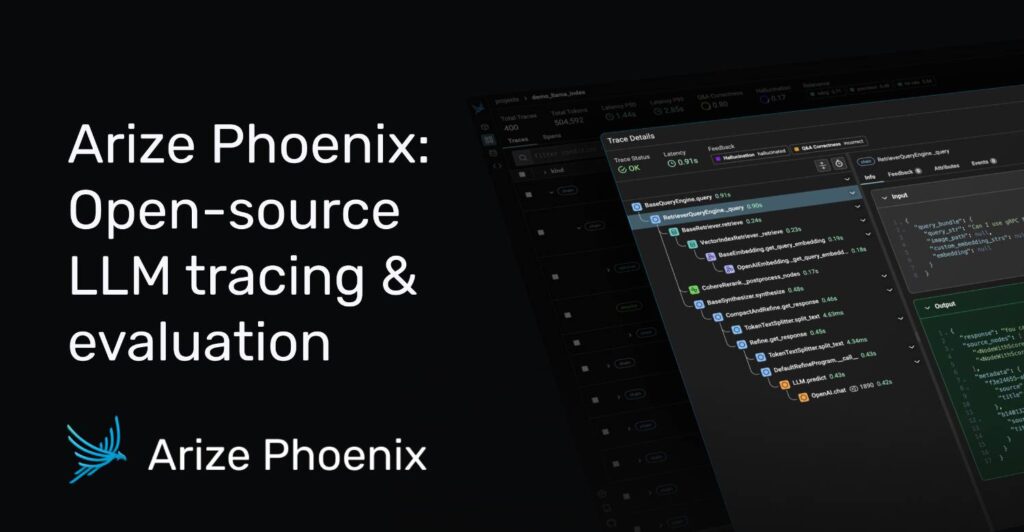
To enable such analysis, observability becomes a foundational requirement. Observability refers to the ability to inspect an agent’s runtime behavior, including execution traces, spans, router decisions, and tool invocations. By capturing this information, one can reconstruct the full execution trajectory of an agent and analyze its internal decision flow. Observability tools such as Arize Phoenix provide structured mechanisms to record and visualize these behaviors, forming the basis for systematic evaluation. With this visibility, different components of an agent can be assessed independently: the router can be evaluated based on whether it selects appropriate tools and parameters, individual skills can be assessed for correctness, clarity, and hallucination, and the overall execution path can be analyzed for efficiency and coherence. At this level, trajectory-based evaluation and metrics such as convergence make it possible to compare agents not only by outcome quality but also by cost, latency, and reasoning efficiency.
Building on observability, agent development can be framed as an evaluation-driven and experiment-based process. Each change to an agent—whether to prompts, models, tools, or decision logic—is treated as a controlled experiment and evaluated using a fixed dataset and a predefined set of evaluators. These evaluators may include deterministic, code-based checks (e.g., SQL correctness or runnable code), qualitative assessments using LLM-as-a-Judge approaches (e.g., clarity or relevance), and, where necessary, human annotations as a high-precision reference. Importantly, even LLM-based judges are not assumed to be infallible; they can themselves be evaluated, calibrated, and improved through experimentation. This evaluation framework naturally extends beyond development into production environments, where real user interactions, monitoring signals, and human feedback continuously feed back into new datasets and experiments. In this way, intelligent agents evolve into living systems that are systematically observed, evaluated, and improved over time, demonstrating that reliable agent performance emerges not from intuition, but from structured evaluation, comparison, and continuous refinement.